
Indonesian Batik is a classic and authentic art in Bali. UNESCO awards Batik as Masterpieces of the Oral and Intangible Heritage of Humanity. The award announcement date is October 2nd, 2009. It receives the award due to its originality and uniqueness.
UNESCO Batik is a masterpiece of pattern design technique on fabric. It applies the wax resist technique to the process. The word “Batik” comes from the word “Tik” in the Indonesian language. The word “Tik” means spot or dot. To summarize, Batik is a fabric coloring and design technique that applies spots or dots.


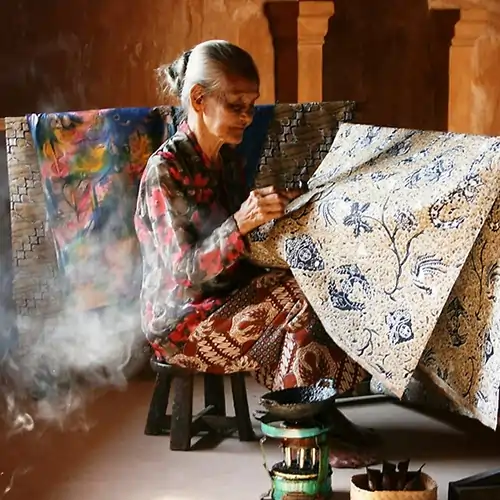
Indonesian Batik Making in Bali as A UNESCO World Heritage
Want to create a custom itinerary with a Batik workshop destination? Please consider booking our tour driver and car charter option below:
Batik from Indonesia
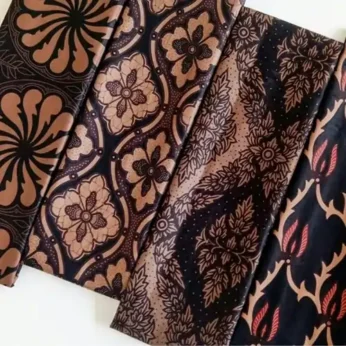
Indonesia is rich in original cultures. It has diverse local cultures and unique traditions. One of its unique classic cultures is the Batik-making tradition. The Indo Batik technique has existed ever since the 13th century. In recent days, the government has declared October 2nd as National Batik Day. It is to commemorate the UNESCO World Heritage awards.
Batik from Indonesia
Real Life Use of Batik in Indonesia
At first, only royal family members and noblemen in the country wore Batik. They wore them as a symbol of social status. Its elegant and beautiful design raises the popularity of the Indonesian Batik shirt. Its popularity is rising along with economic advancement. Furthermore, the UNESCO awards also increase the pride of wearing Batik clothing.
Nowadays, most Indonesians may have some Batik collection in their wardrobes. Government staff and school students are wearing Batik uniforms every Thursday or Friday. Some private companies and corporations in Indonesia are also adopting this uniform arrangement. For regular people, they wear their best Batik outfit on a special occasion.
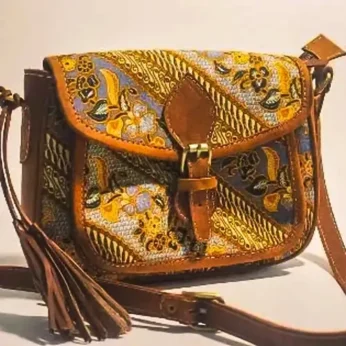
The use of Batik has also developed over the years. Not only in clothing implementation, but its design is also incorporated into other objects. We can also see Batik patterns on the wallet, pillow case, bed cover, etc.
Real Life Use of Batik in Indonesia
Balinese Batik Making in Tohpati Village
Indonesia is an archipelagic country. It means it has separate islands. This geographic separation is also impacting the cultural development of each island. It includes the characteristics and development of Batik design and philosophy. The most well-known Batik products in Indonesia are Batik Pekalongan and Balinese Batik.
The best place to visit for Balinese Traditional Batik is at Tohpati Village. It is well known for its high quality and beautiful design. The location is at the Kesiman Kertalangu area, East Denpasar, Denpasar City, Bali. Nowadays, the Batik industries here are not only making Batik as a product. Furthermore, they also become cultural tourist attractions. If you are curious about the Batik-making process, you can visit the workshop. You can see the production process in person.
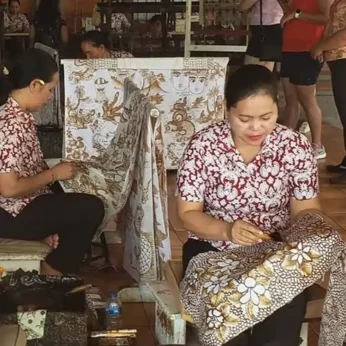
Balinese Batik Making in Tohpati Village
Interested in visiting the Batik workshop at Tohpati Village? Please consider booking one of the tour packages below:
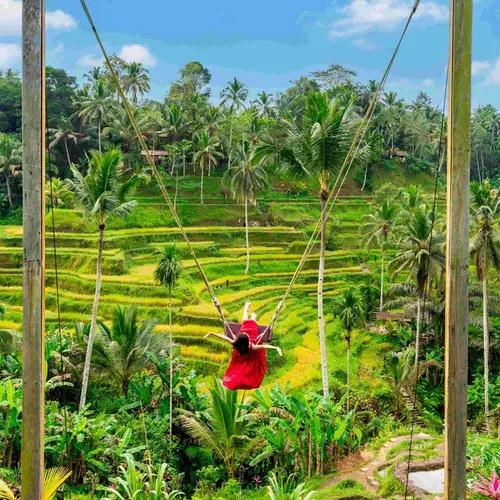

Main Materials and Equipment for Batik Production
The unique aspect of this traditional art is its production process. It utilizes wax to cover the part of the fabric that you do not want to have colored. Before we delve deeper into the making process, we have to know the materials and equipment.
Main Materials
Fabric
- It is the material we need for the canvas.
- The common fabric types used for Batik are cotton and silk. Cotton is for the lower grade, while silk is for the higher grade of Batik.
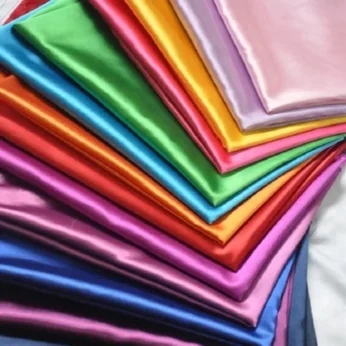
Silk
Color or Paint
- It is for making the main pattern on the fabric.
- Classic Batik uses dark colors such as brown, grey, and black. Those colors is from natural and herbal ingredients. Nowadays, various color options are available due to modern textile development.
Wax
- It is to cover the area of fabric that will not have color.
- There are several types of wax used in Batik making. They are paraffin wax, beeswax, soy wax, microcrystalline wax (sticky wax), and others.
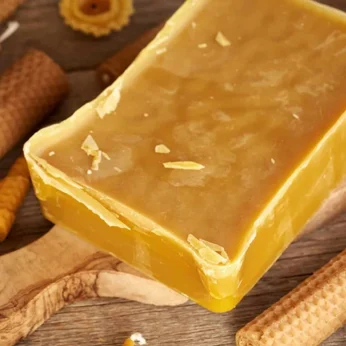
Batik Wax
Hot Water
- It is for removing or cleansing the wax after the coloring process done.
Rubber Band or Thin Rope
- This material is only used in the tie-dye Batik type.
- It is to create a tight tie around the fabric. The tight tie will compress the fiber inside the fabric.
Main Tools or Equipment
Pencil
- It is to draw the raw sketch of the pattern in hand-printed Batik type.
- A pencil is preferable to a pen since it is easier to erase the mark. After all, the sketch is for guidelines only.
Canting
- It is to apply the wax onto the fabric in a hand-printed Batik type.
- It has different hole sizes depending on the area size you want to cover. A smaller area will need a smaller hole size to maintain its details. Covering a larger area is faster using a wider hole size.
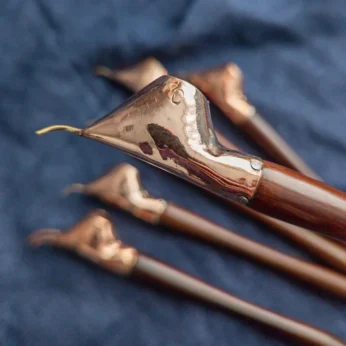
Batik Canting
Stamp
- The same as canting, it is to apply the wax onto the fabric.
- It is used in stamp Batik type only. It has predetermined design for each individual item.
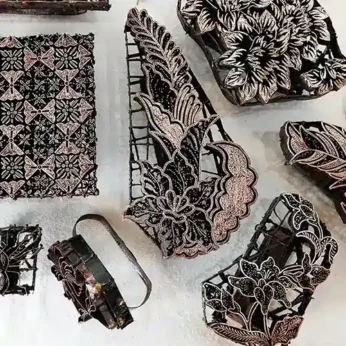
Batik Stamp
A Paintbrush
- It is for applying color to the fabric or canvas. We can also use it to apply the wax to a large area.
- If we use a paintbrush for both the waxing and coloring process, it is better to prepare one for each use.
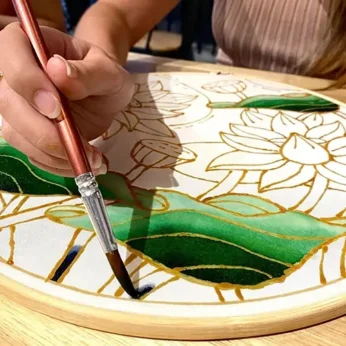
A Paintbrush
Stove
- It is for heating and melting the wax.
- We also need it to prepare hot water for wax cleaning.
A Metal Pot or Container
- It is for the container for the wax.
- We need to use a pot or container made from metal materials. The shape also depends on the Batik we create. For hand-printed type with canting tools, we will need a small pot with a deep depth. For the stamp type, we will need a wide pot with shallow depth.
Bucket
- It is for the hot water container during wax removing stage.
Different Batik Types Based on Their Production Techniques
Batik production using different techniques to achieve different results. Based on the production technique, there are several types of Batik. The different kinds of Batik based on their making technique are:
Hand-Printed Batik (Batik Tulis)
Some people refer to this type as handmade Batik. It is also the original and oldest way of making Batik. Based on my perspective, this is the highest grade of Batik. It is due to its complexity and difficulty level of the making process.
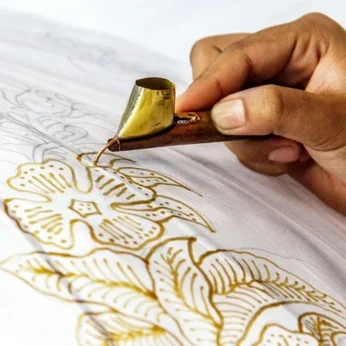
Hand-Printed Batik (Batik Tulis)
Because it is dependent on the artist's technique, it is difficult to recreate a duplicate. Furthermore, hand-printed Batik usually uses silk material instead of cotton. It is to support its original artistic value. For this reason, Hand-Printed Batik is often offered at a high price.
Step-by-Step Handmade Batik Creation Procedure
- First, we sketch on the fabric using a pencil. The basic sketch is crucial for the hand-printed batik. The raw design details will determine the process difficulty level and final product.
- Next step, we will apply the wax on top of the sketch line using canting. After that, we continue to cover the area that will not have color.
- After the first waxing stage is complete, we will color the empty area with a paintbrush. Then we need to wait for the paint to dry.
- After it dries, we need to remove the wax. We will wash the fabric with boiling water.
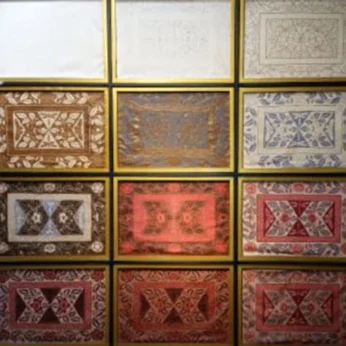
Step-by-Step Handmade Batik Creation Procedure
After the first stage done, you can see the halfway result. The area that has waxed will not have color on it. Now we can continue to the second stage. The second stage of hand-printed Batik is only the repetition of the first stage. The number of stages we do depends on the number of color variations we use. Starting from the second stage, the difficulties are higher.
You have to decide which area will have a new color. And then determine which area should have a combination of the colors. The step is the same, but we should repeat until it finishes. More color and a mix of color, the more steps you have to do.
Stamp Batik (Batik Cap)
Stamp Batik is much simpler and faster to finish. It only utilizes the “Stamp” to apply the wax on the fabric. Then it will have an identical design across the material. Stamp Batik is very efficient for mass production. The reason is that it will create the same design. But the Stamp Batik product only consists of 2 colors. The colors are the canvas background color and the second color you put on it.
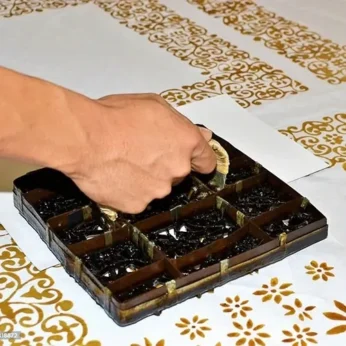
Stamp Batik (Batik Cap)
Painting Batik (Batik Lukis)
As the name suggests, this type of Batik utilizes a painting technique. We draw the design with a brush and paint on the fabric. Unlike the previous two types of Batik, this technique does not use any wax. You can even say that it is under the painting category. But its intention is for Batik purposes, such as clothing.
Tie-Dye Batik (Batik Jumputan or Batik Celup)
This is the easiest Batik among all we discussed. The technique is pretty simple to do. We create a tight tie around the fabric using a rubber band or thin rope. The tight tie will put compression on the fabric. This compression will prevent the paint from spreading inside the tie.
After tying, we put the whole fabric into a bucket filled with the coloring liquid. This is the reason for its "Batik Celup" name. The word “Celup” in Indonesia refers to dipping or dyeing into color. This process will create a blank coloring space within the tied area.
Combination Batik
As the name suggests, this type combines different techniques to create a Batik. There is no hard rule about what technique you combine. It depends on what you want to create. For example, you use the stamp technique along the edge line to make a nice borderline. Then you combine it with the hand-printed technique in the middle area to create a custom design.
Batik Printing
This is the newest Batik creation technique. It utilizes modern technology to create Batik designs. It also shows that Batik is developing and evolving. Batik is not limited to classic and old methods, but it can also use modern technology.
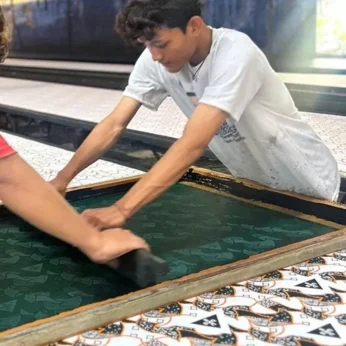
Batik Printing
Things to do in Ubud and Kintamani areas information by Bali Private Tour
Other things to do in Ubud and Kintamani areas: